
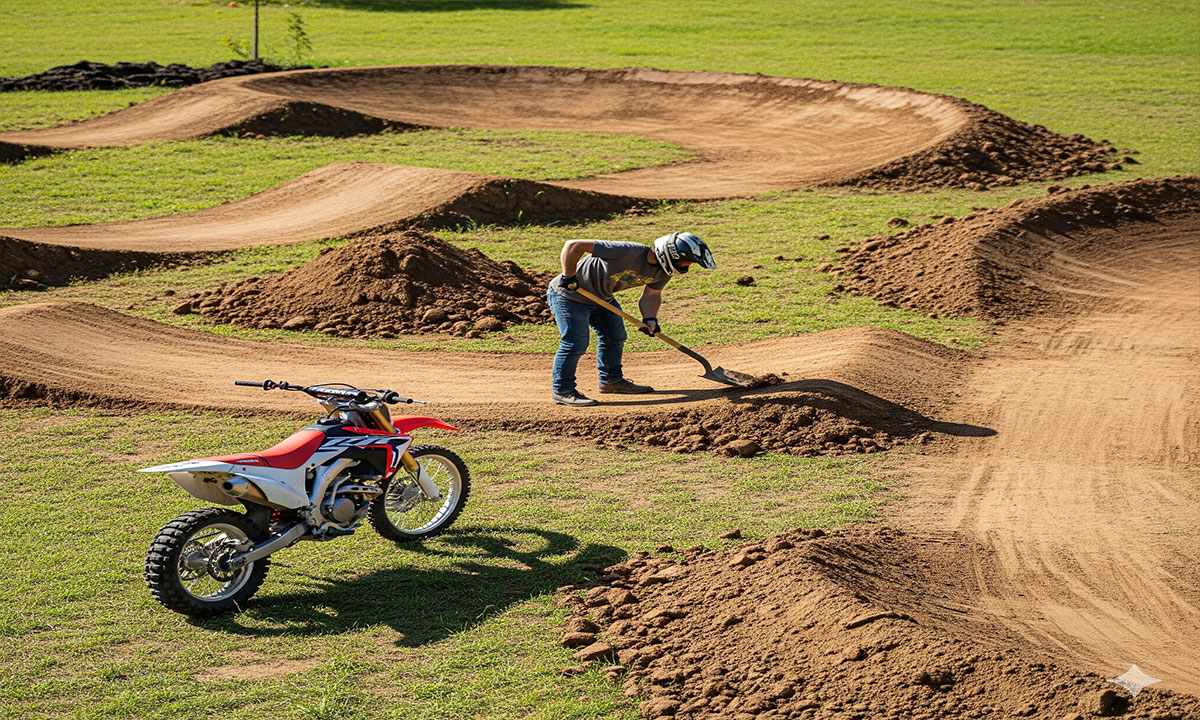

Creating your own motocross-style course in the backyard is easier than you might think when you know how to make a dirt bike track from start to finish. This guide covers everything from planning and dirt bike track design tips to the tools you need and dirt bike jump construction guide steps. Whether you have a small yard or several acres, you’ll learn to design, build, and maintain a safe, fun dirt bike track. Read on for practical steps, insider tips, and real examples of backyard motocross tracks.
One of the first steps in how to make a dirt bike track is to plan your layout. Start by measuring your available land and sketching a simple map on paper or using a smartphone app. Consider the natural terrain gentle slopes and existing hills are perfect for building berms and jumps Ideally, you want at least 400–500 feet of track length to build a small but fun course Pay attention to your surroundings: keep the track away from neighbors and noise-sensitive areas to avoid complaints. Check local regulations or permits for outdoor tracks, and have a plan for securing the area from unauthorized riders (e.g., fencing or signs).
Choosing the right location is crucial when learning how to make a dirt bike track. Find a spot with minimal trees, rocks, or water obstacles. Good sloping terrain helps with drainage and provides natural jumps As one designer advises, “put the design on paper beforehand” to visualize obstacles, turns, and straightaways For example, you might include a starting straight, a few corners with berms (banked turns), and a sequence of jumps or rollers. Take cues from professional tracks by adding variety: combine small double jumps, tabletops, and whoop sections to challenge riders of different skill levels.
Key Planning Tips:
- Measure your land. Mark out at least a 400 ft circuit if possible. Sketch the track flow on paper.
- Use natural terrain. Incorporate hills and slopes into your design. Avoid flat land if you can add elevation.
- Create safe flow. Plan gentle initial turns out of the start straight and include runoff areas. Use trees or shrubs as obstacles if safe.
- Plan drainage. Design the track slightly elevated so rain runs off; include cutouts or channels. Avoid low spots that collect water and erode.
Tools for Dirt Bike Track Building
Building a backyard track requires some specialized equipment, but you can start small and upgrade tools over time. A mini-excavator or skid-steer loader makes moving dirt and shaping jumps much faster. If you don’t own heavy machinery, consider renting one for a day or two Besides machinery, gather basic landscaping tools: shovels, wheelbarrows, rakes, and tamping tools help refine jumps and smooth surfaces. Don’t forget a watering device (hose or sprinkler) to moisten the soil during building and after riding, which keeps dust down and the track packed. Helmets, gloves, and safety gear are also essential – wear protective gear whenever you operate equipment or ride.
Essential Tools List:
- Heavy equipment (rent/own): Mini excavator, bulldozer, or tractor with a bucket – for moving large volumes of dirt.
- Hand tools: Shovels, pitchforks, rakes, and wheelbarrows – for fine shaping of jumps and smoothing the track.
- Watering gear: Garden hose or sprinkler – to water down and compact the soil as you work.
- Measuring tools: Tape measure, stakes, string line, and spray paint – to mark track lines and obstacle placements.
Have friends help with manual work if you lack machines. As one builder notes, “it is always better to rent the machine along with a professional who knows how to get the result without messing up the area. With the right tools ready, you can tackle large jumps, berms, and turns more confidently.
How to Make a Dirt Bike Track: Dirt Bike Track Design Tips
Designing a track for fun and safety involves a few key considerations. Start with the basic sections of a motocross track: a start straight, corners (preferably banked berms), and rhythm sections of consecutive jumps or rollers. When placing obstacles, ensure they flow from one to the next. For example, riders need room to accelerate after a jump and prepare for the landing or the next turn. Mark the track path clearly with flags or spray paint before digging. Leave wide, safe run-off zones at the end of jumps and corners in case riders misjudge.
Try to use Latent Semantic Indexing (LSI) terms to keep the design relevant: think motocross obstacle, backyard motocross track, and off-road course layout. Discuss your plan with experienced riders for feedback. Visual guides like videos can help; for instance, Red Bull’s motocross design guide suggests riding your bike on the land first and mapping where natural jumps and turns are. Then “put all of this on paper” to refine your track flow.
Obstacle Tips:
- Jumps (Booters & Tabletops): Build jumps with gradual takeoff and landing slopes. The tallest jump (booter) is often near the finish.
- Whoops/Rollers: Incorporate a rhythm section of smaller, quick bumps (whoops) so riders practice staying balanced. Space them evenly and align them in a straight line for safety.
- Berms: Bank the edges of corners (berm turns) so riders can lean into turns without losing speed. Use the excavator bucket or shovels to pile up dirt on the outside of turns.
- Rhythm Section: Create a series of 2-3 small jumps or rollers so riders can “get into a rhythm” before a bigger jump.
Remember backyard dirt bike track ideas: keep novelty and fun. You could build a pump track (a series of rollers you pump through), a figure-8 layout, or include a tabletop jump (flat top with angled ends). Each section should challenge riders but also be adjustable (for instance, start with lower jumps and steepen them later).
Building Jumps: Dirt Bike Jump Construction Guide
Building jumps is a core part of making a track. The technique is similar for any dirt jump: create a ramped takeoff and a gradual landing. Begin by piling dirt into a triangular mound for each jump. Use a level and measuring stick to ensure consistent takeoff angles. Pack the dirt tightly by watering and then riding over it or using a compactor to eliminate air pockets. The top of the jump should be firm.
Jump Construction Steps:
- Frame the Jump: Mark the outline of your ramp and landing with stakes or flagging tape.
- Dump and Shape Dirt: Pile a large mound of screened dirt at the takeoff, slightly less for the landing side. Don’t make the ramp too steep initially – you can always rebuild it higher later
- Smooth the Surfaces: Use shovels and rakes to shape the ramp into a smooth slope. The angle determines how far and high riders will fly. Check from the rider’s perspective for a smooth curve.
- Compact with Water: Moisten the dirt and compact it with a plate compactor or by riding the bike over it. This makes the jump solid and helps it hold its shape
- Test and Tweak: Ride over the jump at low speed to test the shape. Adjust any bumps or bumps in the takeoff or landing. You can gradually increase ramp height as confidence grows.
For safety, build beginner jumps first. A simple tabletop jump (flat top) is safer for learning than a gap jump. Always wear full safety gear (helmet, boots, pads) when testing new jumps.
Track Construction: Step-by-Step Process
Once design and tools are ready, construction begins. Follow these general steps to bring your design to life (adapted from industry guides:
- Clear and Mark the Area: Remove any debris, logs, or rocks from the track path. Outline corners, straights, and obstacle zones on the ground.
- Rough Out the Track: Use heavy equipment to grade the main path. Create wide straights and bank the berms by piling dirt on the outside of turns. Use the machine’s bucket or dozer blade to smooth surfaces.
- Form Jumps and Features: Build each jump as described above. For speed bumps (rollers), simply mounds of dirt evenly spaced. Shape tabletops and jumps while continually compacting.
- Finish Corners (Berms): Dig out corners’ inside edge and use that dirt to form the outside berm. A well-built berm lets riders maintain speed in turns. Check that berms have a smooth transition in and out.
- Irrigate and Pack: Lightly water the entire track and use the tractor or rollers to pack down soft spots. This creates a hard but grippy surface. Repeat watering after construction to keep dust low and solidify ruts.
Build the track in phases if needed. You can create a smaller loop first, enjoy it, then expand or reconfigure parts later. This iterative approach saves time and lets you improve the design with each ride.
Best Soil and Drainage Practices
The soil type greatly affects track quality. Clay holds shape well for jumps, but can become slippery when wet. Sandy soil drains quickly but may not hold a jump’s form. The ideal is a loamy or silty mix that balances these properties. In fact, loamy soil (a mix of clay, silt, and sand) is often considered the best choice for a motocross track because it provides good traction and drainage. Screened dirt – without rocks or roots – is worth the extra cost
Always plan for rain: design your track slightly crowned so water flows off to the sides Dig simple drainage channels or install perforated pipes under low spots. For example, one builder added corrugated drainage pipes covered with soil to handle heavy rain After rain, check the track for erosion. You may need to do minor repairs by adding dirt and re-grading ruts. Regular watering during dry spells can also help keep the track hard-packed and dust under control.
Dirt Bike Track Maintenance Tips
After building your track, maintenance is essential for safety and longevity. Here are some dirt bike track maintenance tips:
- Water the Track: Regularly wet down the track to reduce dust and maintain firmness. A moist track grips tires better and lasts longer.
- Fill Ruts and Holes: Use a shovel or tractor to smooth out deep ruts in turns and landings. Re-pack loose areas to prevent them from growing.
- Repair Jumps: Check jumps for chipping or erosion after heavy use. Re-compact the takeoff and landing slopes if they start to crumble.
- Mow Surrounding Grass: Keep the infield and edges clear of tall grass and weeds. Overgrowth can hide hazards and make the track look untidy.
- Inspect for Hazards: Routinely remove any debris (sticks, rocks) that might have been kicked onto the track. Ensure track boundaries are visible.
A well-maintained track is safer and more fun. Spend a few minutes each week after riding to walk or slowly ride the track and spot trouble areas. For busy tracks, consider applying a light covering of fresh topsoil or crusher dust to fill and level the surface periodically.
Backyard Dirt Bike Track Ideas
Creativity makes a backyard track special. Some inspiring backyard dirt bike track ideas include:
- Pump Track: A looping track of rollers and banked turns that riders can “pump” their bikes through without pedaling. Great for skill-building.
- Family Fun Track: Include smaller, gentle jumps and shaded spectator spots. Good for beginners or kids.
- Obstacle Course: Add dirt ramps, a small tabletop, and maybe even a wooden platform or bermed switchback. Use what the landscape provides.
- Enduro Loop: If you have woods, create a narrow off-road loop with natural log jumps or berms using the terrain.
- Night Track: Install solar or battery-powered lights around key jumps and turns to ride after dark (check local regulations!).
No matter the idea, start simple: even a small loop with a couple of berms and a jump teaches lots of skills. You can always expand the track over time. Share your vision with family or neighbors for feedback — they might help build it too!
Safety Considerations
Before enjoying your new track, address safety: fence off or mark the track boundary, so unaware people or animals don’t wander into the line of fire. Keep a first-aid kit nearby. Discuss etiquette with anyone riding: one bike on the track at a time, clear signaling, and always start slowly on new sections. Consider notifying your insurance company about the track in case of accidents or liability (yes, an oversight here can be expensive
Always start and stop rides on flat ground before entering the track. Wear full protective gear every time. Regularly inspect the track’s surface and features; for example, fix any jagged rocks or exposed rebar in jumps. By prioritizing safety, you’ll have more fun and fewer unexpected problems.
FAQs (Frequently Asked Questions)
Q: How much space do I need to build a dirt bike track at home?
A: You can create a small loop on just an acre of land, but 3–5 acres allows for a more exciting track Aim for at least a 400-foot circuit for realistic turns and jumps More space means longer straights and bigger obstacles.
Q: What kind of dirt is best for a backyard motocross track?
A: A mix of clay, silt, and sand (loamy dirt) is best. It holds jumps well and drains sufficiently Avoid rock-filled soil. Screened topsoil or commercially mixed “motocross soil” is ideal. If you have only clay or sand, mix in gravel or compost to improve it.
Q: Do I need permits or insurance for a home dirt bike track?
A: Check local noise and land-use regulations first. Many tracks run into neighbor complaints if no permits are obtained Also inform your insurance provider – at minimum, have a good liability policy in case a guest is injured.
Q: What tools are needed to build a dirt bike jump?
A: Heavy equipment speeds up the work. Rent or borrow a mini-excavator, backhoe, or tractor to move dirt and form jum. Shovels, rakes, and wheelbarrows are also essential for detail work. A plate compactor (or even riding over jumps) will pack the soil solidly.
Q: How often should I maintain the backyard track?
A: After each riding session, inspect and fix any major ruts or holes. Water the track weekly (more in dry weather) to keep dust down. Every few weeks or months, re-pack loose spots and trim overgrown grass around the edges. Seasonal check-ups (before summer or after winter) help catch issues early.
Q: Can I let kids build and ride the track?
A: Yes, but supervise them closely. Smaller jumps and wide, gentle turns are safer for kids. Teach them to ride one at a time, and always wear appropriate protective gear (helmet, pads). Encourage them to participate in the building process – it’s a great learning project!
By following these tips on how to make a dirt bike track, you’ll create a thrilling backyard course that riders of all levels can enjoy. Good planning, the right tools, and regular upkeep will keep your track in top shape. Ready to start building? Get dirt under your fingernails, share your progress on social media, and join our community’s comments to show off your dirt bike track!

4 thoughts on “How to Make a Dirt Bike Track at Home: A DIY Guide”