

How to Tie Down a Dirt Bike Securely: Best Tips & Methods
Loading your dirt bike safely before transport is a must. With about 730 deaths and 17,000 injuries each year caused by unsecured loads, learning how to tie down a dirt bike properly is essential to prevent crashes, bike damage, or fines. This guide covers the gear, steps, and tips to transport your bike securely in a truck or trailer how to tie down a dirt bike securely
Why Proper Tie-Down Matters
Transporting a motorcycle comes with great responsibility. Each year, unsecured loads cause around 730 deaths and 17,000 injuries, so tying down a bike is crucial. Laws in all 50 states require cargo to be secured to prevent shifting. Follow these guidelines:
- Prevent accidents: A loose dirt bike can become deadly road debris. Proper straps stop the bike from tipping or sliding into traffic.
- Protect your bike: Tie-down straps and soft loops hold your bike firmly. This prevents scratches, broken plastics, or bent handlebars during bumps.
- Stay legal: Regulations state cargo must be tied down to avoid fines. Always double-check strap tension before driving.
By following these safety measures, you turn a potentially risky haul into a safe trip how to tie down a dirt bike securely
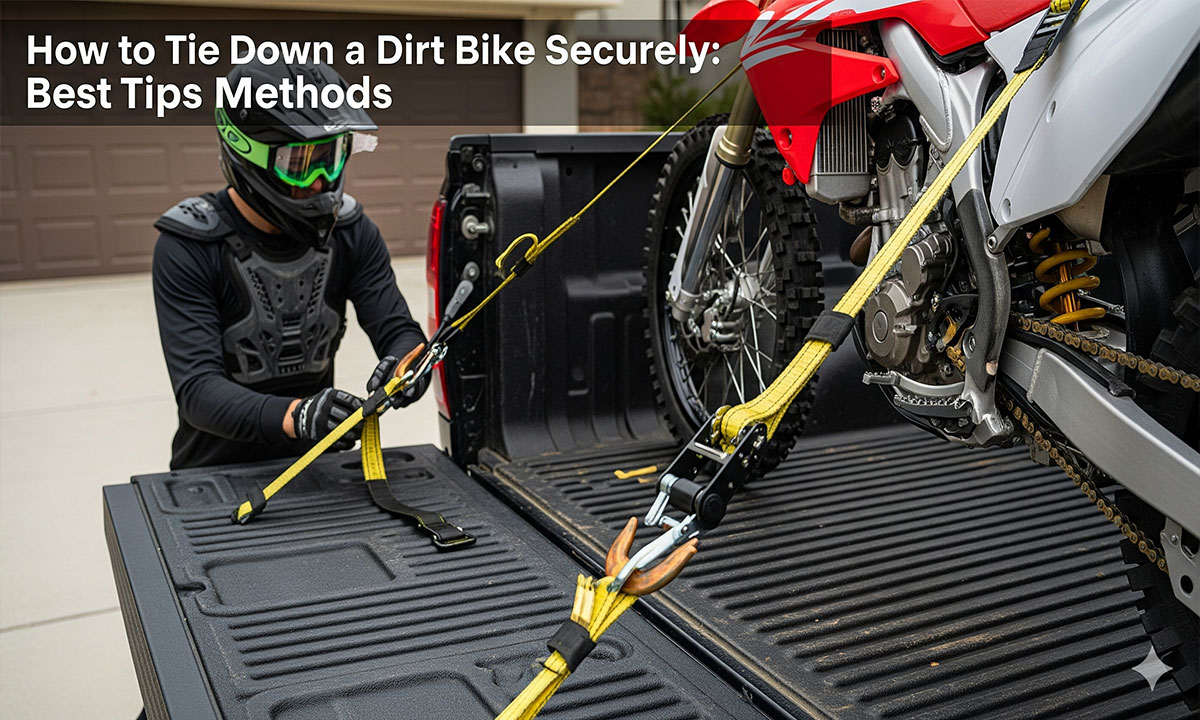
A dirt bike is shown tied down in a truck bed using straps. Notice how the front wheel is turned toward the corner and straps extend from the handlebars to the bed anchor points. This configuration exemplifies best practice for how to tie down a dirt bike securely.
Essential Equipment for Safe Transport
Before loading a dirt bike in a truck or trailer, gather the right tools. Quality gear makes tie-down easy and reliable. Here’s what you need:
- High-strength Ratchet Tie-Down Straps: Buy heavy-duty straps rated well above your bike’s weight. They are often marketed simply as dirt bike tie down straps. Federal guidelines recommend the combined working load limit be at least 50% of the cargo weight.
- Soft Loop Protectors: These wrap around handlebars or frame tubes, protecting paint and offering a tie point for straps. Soft loops prevent scratches where the strap hooks go.
- Wheel Chock (Optional): A front wheel chock holds the bike upright. On a trailer, a sturdy chock is strongly advised. In a truck bed, if you load the bike diagonally, you may skip it.
- Loading Ramp: A ramp lets you roll the bike into the truck bed safely. For stability, always position loading dirt bike in a truck (or trailer) on level ground.
- Anchor Points: Use solid tie-down rings or rails in your truck/trailer. Welded D-rings or built-in anchors are ideal; avoid flimsy spots how to tie down a dirt bike securely.
Loading the Dirt Bike into Your Truck
For a safe load, follow these steps when loading your bike into the truck bed:
- Park on level ground and attach the ramp securely.
- Set the bike in neutral and roll or carefully push it up the ramp into the bed.
- If hauling one bike, position it diagonally (front wheel to one front corner, rear wheel to the opposite rear corner). For two bikes, turn their front wheels inward toward each other.
- Lock the tailgate (or trailer gate) before applying straps.
Tie-Down Steps for Your Dirt Bike
Follow these steps to learn how to tie down a dirt bike securely:
- Attach Front Straps: Hook one ratchet strap on the truck’s front anchor ring, and loop the soft end (with a soft loop protector) over the right handlebar. Do the same on the left side.
- Tighten Straps Evenly: Ratchet each strap until the bike is upright and firm, alternating sides to keep it level. Tighten until snug—only a firm hold is needed, not full fork compression.
- Attach Rear Straps: Repeat at the bike’s rear subframe. Hook straps from the back frame to the truck’s rear anchors and pull the bike forward into the wheel chock.
- Optional – Secure Rear Wheel: If extra security is desired, loop a strap through the rear wheel and attach it to the back anchors how to tie down a dirt bike securely.
Best Dirt Bike Tie-Down Methods
For safe transport, these are the best dirt bike tie down methods: use multiple straps on strong anchors.
- Use multiple tie-points: The recommended approach is a “2×2” setup: two straps over the front handles and two pulling on the rear subframe. This setup (two on 1″ bars, two on 2″ frame) will keep the bike rock-solid.
- Avoid max compression: Tighten straps firmly, but do not crank the suspension to bottom. A slight forward pull is enough.
- Strap angles: Angle each strap diagonally across the bike to resist side-to-side movement.
- Protective loops: Always use soft loops on handlebars or frame. This protects the bike’s finish and ensures a secure attachment point how to tie down a dirt bike securely.
Dirt Bike Transport Safety Tips
- Inspect strap ratings: Make sure each strap’s working load limit (WLL) exceeds half the bike’s weight.
- Double-check tightness: Walk around the truck to confirm straps have no slack and the bike won’t move.
- Secure extra gear: Tie down any loose items or tools. Cover sharp parts to avoid cuts and lock the tailgate or trailer gate.
Tying Down a Dirt Bike on a Trailer
These trailer instructions form a dirt bike trailer tie down guide: place the bike in a wheel chock and strap it down as follows:
- Use a wheel chock: Roll the bike so its front wheel rests firmly in a chock or against the trailer’s nose.
- Front tie-downs: Attach straps to the handlebars (with soft loops) and to anchors at the front of the trailer, pulling the bike forward.
- Rear tie-downs: Fasten straps from the rear subframe to the trailer’s rear anchors, pulling the bike backward. This 4-strap method keeps the bike solid how to tie down a dirt bike securely.
FAQs
Q: How to tie down a dirt bike safely?
A: Start by parking on level ground and using a sturdy ramp. Position the bike diagonally in the bed. Hook straps over the handlebars (using soft loops) and secure to the truck’s anchor points. Tighten each strap evenly until the bike is upright and firm, but avoid fully compressing the suspension. Recheck all straps for any slack. This method ensures your bike is locked down before every trip.
Q: What are the best dirt bike tie down straps?
A: Heavy-duty ratchet or cambuckle straps are ideal. Look for 1.5”–2” wide straps with a working load limit of 500+ lbs. For example, Rhino’s 8-foot cambuckle straps (WLL ~500 lbs) are a popular choice. Always use high-quality dirt bike tie down straps that won’t slip or fray how to tie down a dirt bike securely.
Q: Should I compress the forks when tying down?
A: Only slightly. Experts recommend just a firm hold on the handlebars rather than cranking down the forks fully. The straps should hold the bike upright without maxing out the suspension.
Q: Are wheel chocks necessary?
A: On a trailer, yes. DOT guidelines suggest chocking any rolling equipment. In a pickup truck, if the bike is positioned diagonally, how to tie down a dirt bike securely it may stand fine without a chock. A chock adds stability but isn’t mandatory in every case.
Q: Where do I attach the straps on my dirt bike?
A: Attach front straps to the handlebar crossbar or upper triple-clamp (with soft loops) and hook to the truck’s front D-rings. Attach rear straps to the bike’s frame or subframe behind the seat. Never hook onto levers, cables, or plastic body panels how to tie down a dirt bike securely.
Q: How tight should the straps be?
A: Tighten each strap until it’s snug and the bike won’t move, but don’t overtighten. A “firm hold” is enough. If the bike can still shift or rattle when you push it, tighten the straps a bit more how to tie down a dirt bike securely.
Q: What if I’m loading two dirt bikes?
A: Place them side by side with their front wheels turned toward each other. This cradles the bikes for stability. Tie down each bike individually (two straps per side) following the same steps above. Ensure neither bike can shift under the other’s weight how to tie down a dirt bike securely.
Conclusion
Mastering how to tie down a dirt bike securely protects your investment and everyone on the road. With the right straps and technique, a properly tied-down bike behaves safely like any other cargo. Always double-check your tie-downs before driving, and remember the key steps above to load and secure your bike. By following this guide’s methods and dirt bike transport safety tips, you can travel confidently without risking fines or accidents. Safe travels!
