


Changing the oil in your dirt bike is a crucial maintenance task that keeps the engine running smoothly and prolongs its life. In this comprehensive guide on how to change dirt bike oil, we’ll cover everything from gathering the right tools for dirt bike oil change to choosing the best oil for dirt bike engines. Whether you’re a beginner or an experienced rider, you’ll learn each step in the dirt bike oil change step guide to perform the job safely and efficiently at home.
Dedicating the right tools and fresh oil to your maintenance can improve performance and prevent costly repairs. We’ll also explain how often to change dirt bike oil and why dirt bike oil filter replacement is essential. By the end, you’ll have a full understanding of the process and confidence to do it yourself.
Essential Tools for Dirt Bike Oil Change
Before you start, make sure you have all necessary tools and supplies on hand. Preparing in advance makes the oil change faster and cleaner. Key items include:
- Dirt bike stand: A sturdy stand or lift keeps your bike level and stable. Elevating the bike ensures you can safely access drain plugs and filters. A solid stand “provides the necessary support to keep your bike stable during maintenance”, making oil changes easier and safer.
- Wrenches and sockets: You’ll typically need a socket or box wrench (common sizes like 12mm-17mm) for the drain bolt, plus any specific plug wrenches or hex bits your bike uses. Also grab a socket wrench and a dedicated oil filter wrench (or socket) to remove the filter. Having a variety of wrench sizes is crucial: “a socket wrench with the correct socket size for the drain plug is key for easy removal and secure tightening. Similarly, a filter wrench is necessary to efficiently replace the oil filter.
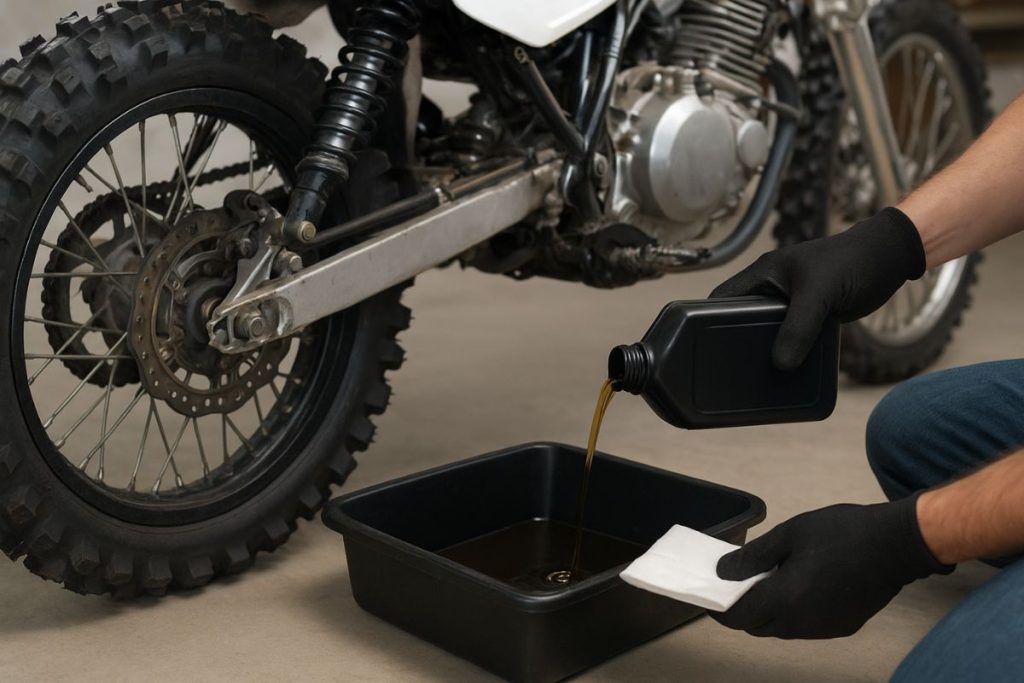
- Oil drain pan: Use a low-profile pan to catch the used oil as it drains. Position it under the engine before loosening the drain bolt. This pan should hold at least a gallon (around 4–5 liters) to accommodate the oil.
- Funnel and measuring jug: A funnel helps pour new oil cleanly into the engine without spills. A measuring jug (if needed) lets you pour the correct amount based on your bike’s capacity.
- New oil and filter: Check your owner’s manual for the recommended oil type (see next section). Always have fresh, motorcycle-specific engine oil on hand (often 4-stroke JASO MA or MA2-rated oil) and a new oil filter or gasket as required.
- Replacement crush washers or O-rings: Many dirt bikes use a crush washer on the drain bolt or a rubber O-ring; always replace these to prevent leaks.
- Safety gear: Gloves and eye protection keep you clean and safe. Also keep rags or shop towels nearby for spills and cleaning.
Gathering these tools and supplies first will make the oil change process smooth and stress-free. Vice grips can also be handy for stubborn bolts or filters, and having your bike on a stable stand ensures “oil changes and other maintenance tasks [are] much more manageable.
Step-by-Step Guide: How To Change Dirt Bike Oil
Follow these steps to change your dirt bike’s oil like a pro. Each step is detailed below. It’s a good idea to work on a flat, level surface and let the engine cool slightly after a short warm-up ride.
- Prepare the bike and area. Park the bike on its stand so it’s upright and level. Wipe away any dirt around the drain plug and filter housing to keep debris out of the engine. Wear gloves, and lay down cardboard or newspaper to catch spills. (A quick ride before this can heat the oil, but be careful not to burn yourself.)
- Locate and loosen plugs. Identify the oil fill (filler) plug (often on the engine side cover) and the drain plug (underside). First remove the fill plug – this allows air in and helps the oil flow out . Then position your drain pan under the drain plug. Use the socket wrench to loosen and remove the drain bolt; oil will begin pouring out. Let it drain completely (5–10 minutes is typical) until the flow slows to a .
- Remove the oil filter. While the oil drains, remove the old filter. For spin-on filters, use an oil filter wrench or strap wrench to unscrew it. (A cartridge filter may require opening the filter cover.) Be prepared for additional oil to spill when the filter comes off. Wipe the filter-mounting surface clean with a . Properly dispose of the old filter when done.
- Install the new filter. Lubricate the new filter’s rubber seal with a little fresh oil. Screw on the new spin-on filter by hand until the gasket touches the engine, then tighten it an extra ½–¾ turn (or as specified). If it’s a cartridge filter, clean the cover and O-ring area carefully and reinstall per manufacturer instructions. Using a filter wrench to give the spin-on filter a final snug quarter-turn helps ensure a good seal.
- Reinstall the drain plug. Replace the drain bolt gasket or crush washer with a new one. Screw the plug back in by hand to avoid cross-threading, then tighten it securely with a wrench. If you have a torque wrench, torque to the spec in your manual; otherwise, tighten it snugly but don’t over-torque. Overtightening can strip threads or damage the oil pan.
- Add new oil. Insert the funnel into the fill hole. Pour in the correct amount and viscosity of fresh oil (see next section) recommended by your bike’s manual. Check the level via the sight glass or dipstick frequently; add oil until it’s between the “Low” and “Full” marks. Replace the fill plug and tighten it.
- Check for leaks and finalize. Start the engine and let it idle for a minute. Look under the bike and around the filter for any leaks. Turn off the engine, wait a minute, then recheck the oil level and top off if needed. Proper disposal of old oil is important – many parts stores or recycling centers accept used oil and filters. Pouring old oil back into its container helps prevent spills.
By following this step-by-step dirt bike oil change guide, you’ll complete the job quickly and efficiently. With practice, it becomes a “quick and easy process that can be done in the convenience of your own garage”. Always refer to your owner’s manual for specific details, but this outline covers the essentials for most four-stroke dirt bikes.
Choosing the Best Oil for Your Dirt Bike
Selecting the right oil is key to protection and performance. Dirt bike engines require motorcycle-specific engine oil (not automotive oil) because it must also lubricate the transmission and wet clutch. Look for a JASO MA or MA2 certified motorcycle oil (the MA2 rating is especially common for off-road bikes). As AMSOIL notes, “motorcycles typically require JASO MA/MA2 certified motorcycle-specific oils”. Avoid automotive or non-motorcycle oils.
Viscosity (weight) depends on temperature and bike design. Many dirt bikes use 10W-40 or 10W-50 four-stroke oil. Some high-performance models call for 5W-40 in cold climates. The best oil for dirt bike use is often a high-quality full-synthetic 4-stroke oil designed for motocross or off-road use. Synthetic oils like AMSOIL DB, Motul 7100, Maxima 4T, or Mobil 1 V-Twin (motorcycle grade) offer excellent high-temperature stability and clutch protection. Check your manual’s recommendation; it may specifically call for a brand or grade. For example, some manuals simply say “motorcycle oil, JASO MA2”. Use that viscosity (e.g. 10W-40) and premium grade.
In short, use a motorcycle-specific synthetic oil rated for four-stroke dirt bikes. These oils contain additives to guard against the intense heat and extreme conditions of off-road riding. Using the right oil type will help your engine, clutch, and transmission run smoothly.
How Often to Change Dirt Bike Oil
Oil change intervals vary, but a common recommendation is every 15 hours of riding (or roughly every 3–4 rides). Many factory service manuals call for about 15 rider-hours or every 240–350 miles, whichever comes first. After the break-in period on a new or rebuilt engine, change the oil (and filter) early (often after the first ride or first 5–10 hours) to remove any break-in debris.
After break-in, stick to roughly 15–20 hours of hard use for general trail riding. If you race often or ride in extremely dusty or dirty environments, change the oil more frequently – even as often as every 5–10 hours. The oil darkens and thickens with use and contaminants, so don’t hesitate to change it if it looks very dark, smells burnt, or if the bike’s performance drops.
Always check your owner’s manual – it may give a specific interval. But as a rule of thumb: frequent riding or racing → oil change every ~10–15 hours; casual trail riding → every ~15–20 hours. Neglecting timely oil changes can lead to increased engine wear, overheating, and in severe cases, engine.
Dirt Bike Oil Filter Replacement
Replacing the oil filter is as important as changing the oil. The filter traps metal shavings, dirt, and contaminants to keep the oil clean. It’s best practice to install a new oil filter every time you change the oil. Cartridge-style filters should be replaced with a new element, and spin-on filters with a new canister.
As a general guideline, change the oil filter at least every 20–30 hours of riding (about 2,000–3,000 miles). In very dirty conditions, or for racing, some riders replace the filter every 15 hours to ensure ideal flow. The XJD maintenance guide notes: “As a general rule, it is recommended to change the oil filter every 2,000 to 3,000 miles or every 20 to 30 hours of riding”. Check your manual – some bikes specify an exact interval.
When replacing the filter: first drain all the oil (see steps above). Ensure the mating surface is clean, then lightly coat the new filter’s rubber seal with oil and thread it on. For spin-on filters, tighten by hand and then about ¾ of a turn with a wrench. For cartridge filters, replace the filter element and any O-ring/gasket. Proper dirt bike oil filter replacement prevents clogs – a clogged filter restricts flow and can starve the engine of oil.
FAQs
- Q: How often should I change my dirt bike oil? A: Generally, change the engine oil every ~15 hours of riding (about 2–3 trail rides). If you ride in dusty/muddy conditions, or race often, change it more frequently. Also change it after the initial break-in period. Always follow your owner’s manual for the exact interval.
- Q: What oil is best for dirt bikes? A: Use a high-quality, motorcycle-specific 4-stroke oil (JASO MA/MA2 certified) of the weight recommended by the manufacturer (commonly 10W-40 or 10W-50). Many dirt bike riders prefer full-synthetic oils for better high-temp performance. Avoid car oils – motorcycles need oil that’s safe for wet clutches.
- Q: Do I need special tools to change dirt bike oil? A: No special tools are required beyond basic wrenches and a filter wrench. Key tools include a socket (or box) wrench for the drain bolt, a fitting wrench or socket for the oil filter, an oil drain pan, and a funnel. A dirt bike stand is very helpful for stability. Vice grips can assist with stubborn bolts or filters.
- Q: Should I replace the oil filter every oil change? A: Yes. Replacing the oil filter with each oil change ensures contaminants are removed. A clogged filter can harm the engine. Spin-on filters should always be replaced when changing oil. Cartridge filters should be serviced or replaced per the manual.
- Q: What happens if I don’t change the oil? A: Dirty or low oil leads to poor lubrication, increased friction, overheating, and accelerated wear on engine parts. In extreme cases, it can cause engine seizure. Regular oil and filter changes are cheap insurance against costly engine damage.
Conclusion
Knowing how to change dirt bike oil at home empowers you to keep your bike in peak condition. Regular oil changes remove contaminants, ensure proper lubrication, and help prevent engine wear. By gathering the right tools for dirt bike oil change – stand, wrenches, drain pan, new oil and filter – and following the outlined steps, you can complete an oil change safely in about 30 minutes. Remember to use the best oil for dirt bike (motorcycle-rated and the correct weight) and replace the filter to get maximum engine protection. Finally, stick to a consistent schedule (about every 15–20 hours of riding) for how often to change dirt bike oil, and you’ll help your engine live longer and perform better.

2 thoughts on “How To Change Dirt Bike Oil At Home”