
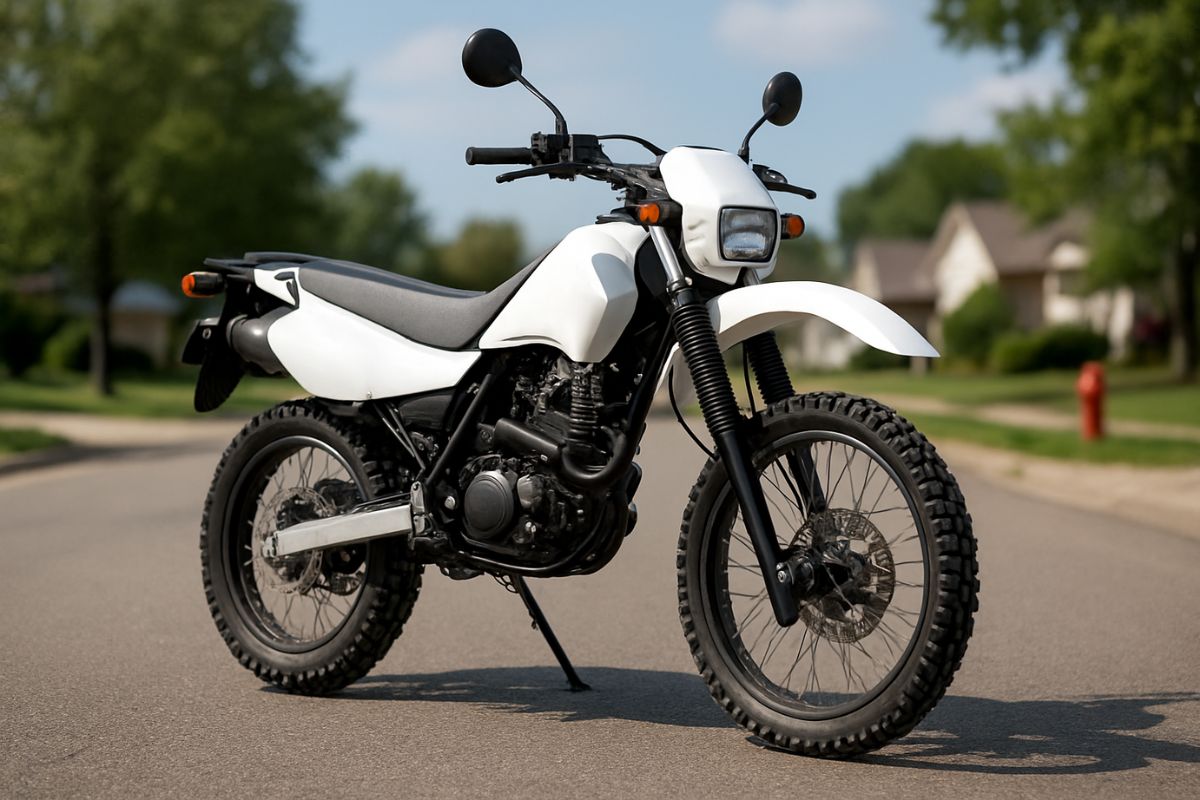

Making a dirt bike street legal involves adding safety gear, equipment, and completing paperwork so your off-road bike can be ridden on public roads. In this comprehensive guide, we’ll explain how to make a dirt bike street legal by breaking down the process into clear steps.
You’ll learn about the street legal dirt bike requirements, cost to make dirt bike street legal, and the dirt bike registration process. Whether you want conversion tips or top street-legal models to consider, we’ve got you covered.
Converting an off-road bike to a street-legal dirt bike requires specific parts and legal compliance. Below we share Dirt bike street legal conversion tips and the must-have equipment (lights, mirrors, horn, etc.) to meet requirements. This includes headlight and taillight installation, turn signals, mirrors, DOT-approved tires, a horn, and a muffler or exhaust that meets local laws.
Key Equipment and Conversion Tips
To satisfy most street legal dirt bike requirements, start by installing the following essentials:
- Headlight – A DOT-approved headlight (high/low beam) is usually required. It should be visible day and night and ideally be an LED for low power draw.
- Taillight and Brake Light – A combined taillight/brake light (often LED) ensures vehicles behind see you stop. Some kits bundle taillight, brake light, turn signals, and license plate light together.
- Turn Signals – Although not mandatory in all states, installing front and rear turn signals greatly improves visibility and control during lane changes. In many areas, hand signals suffice, but blinkers are safer.
- Mirrors – Most jurisdictions require at least one rearview mirror, and some require two. A wide-angle mirror helps eliminate blind spots. Bar-end mirrors are a popular low-profile option.
- Tires – Fit DOT-approved tires (marked “DOT” on sidewall) suitable for highway speeds. Knobby tires with DOT labels or street tires on 17″ wheels (supermoto conversion) both work, but non-DOT off-road tires are not roadworthy.
- Horn – An electric horn is essential. All states mandate a working horn on a motorcycle. Even if not explicitly required, a horn can warn other road users.
- License Plate and Bracket – A license plate bracket and light are legally required. Mount the plate visibly (some states prefer horizontal) and light it with a small LED strip or dedicated lamp.
- Muffler/Exhaust – Many areas require a street-legal muffler or spark arrestor to meet noise and emissions rules. For example, Florida law specifically lists a muffler among its required equipment. Check local laws for exhaust rules.
- Speedometer/Odometer (if needed) – In some states only, a speedometer (odometer) is required. It’s generally optional, but useful for measuring speed and distance.
- Additional Mods – Aftermarket wiring harnesses, battery, and regulator/rectifier may be needed to power the lights and horn. Ensure your charging system (stator/regulator) can handle the extra electrical load.
Following these dirt bike street legal conversion tips ensures your bike has all the gear required by law. Remember that specific requirements can vary by state or country. For example, in Texas you must have lights, signals, mirrors, and a license plate holder, while in Florida you need lights, mirrors, and a muffler. Always double-check your local street legal dirt bike requirements before riding.
Registration and Insurance
Once your bike is outfitted with street-legal gear, you must title and register it at your local DMV. Here’s an overview of the dirt bike registration process in most regions:
- Complete Paperwork: Fill out the required registration application forms for a motorcycle/dirt bike (available from your state’s DMV or online).
- Provide Documentation: Present proof of ownership (e.g. bill of sale or certificate of title) and proof of insurance. Insurance coverage is mandatory in most states for any vehicle on public roads.
- Pay Fees: Pay registration, titling, and tax fees. The amount varies by state and vehicle type.
- Pass Inspections: Some states require a vehicle or emissions inspection before issuing street-legal status. This may include verifying VIN, lights, and safety features.
If your bike has been heavily modified, you might need a “special construction” or custom vehicle process (e.g. obtaining a VIN from scratch, inspections by a bureau) before plates can be issued. For instance, California requires a “special construction” inspection and VIN assignment for homemade or significantly altered bikes.
After registration, always keep your plates, title, and insurance up-to-date. You might also need a valid motorcycle endorsement on your driver’s license to legally ride a street-legal dirt bike in most jurisdictions.
Cost to Make Dirt Bike Street Legal
The cost to make a dirt bike street legal depends on the parts you need and local regulations. For basic compliance (lights, mirrors, horn, DOT tires, etc.), expect to spend roughly $300–$1,000 total. Entry-level conversion kits (including headlight, taillight, turn signals, horn and wiring) often cost a few hundred dollars. DIY wiring or used parts can save money too.
If your area has stricter requirements (e.g. catalytic exhaust, emission controls, multiple inspections), costs can rise. For example, meeting advanced emissions/safety standards can push your total into the thousands. Labor and installation by a shop (if not DIY) will also add to cost. Always get quotes for parts and labor before starting.
Budget Tips: Shop around for affordable parts kits (brands like Baja Designs, Tusk and XTC offer conversion kits), or consider buying a used street-legal bike. Dual-sport models like the Honda XR or Yamaha XT come road-ready from the factory and might save money versus converting a pure dirt bike.
Best Street Legal Dirt Bikes
If conversion sounds daunting, remember there are many factory-made dual-sport/enduro bikes that are street-legal right out of the crate. These often share DNA with dirt bikes but include all required equipment. Some best street legal dirt bikes to consider include:
- Honda CRF450RL (2024) – A 450cc dual-sport with 41.7 hp and full emissions kit. It’s essentially a supermoto-ready race bike with street gear. Priced around $10,099.
- KTM 450 EXC-F Six Days – A 450cc model (57 hp) built for extreme enduro events. 17″ wheels for pavement and a powerful 57-hp engine make it a top performer on road and trail.
- Husqvarna FE 501s – A 501cc powerhouse with premium suspension. The 2024 model has 500cc liquid-cooled engine and an aggressive geometry; at 258 lbs it’s one of the lightest big-bore dual-sports. Its top-tier quality comes at a premium price (~$13,049).
- Beta 390 RR-S – Italian enduro bike with a 390cc engine (~40 hp) and only 241 lbs wet. It’s praised for balance and traction control, making it surprisingly capable both off-road and on pavement.
- Christini AWD 450DS – A unique 450cc bike with all-wheel-drive. Delivers about 42 hp, excellent suspension (12″ travel), and a special AWD drivetrain. It stands out for traction but is expensive (~$16,500).
Each of these models comes factory-equipped with lights, signals, horn, mirrors, and a street-legal exhaust. They may cost more upfront than a dirt bike, but save you the effort of conversion. Ultimately, the Best street legal dirt bikes depend on your needs (lightweight trail bike vs. highway cruiser) and budget.
Conclusion: How To Make A Dirt Bike Street Legal
Converting a dirt bike to street-legal isn’t hard if you follow the rules. You now know how to make a dirt bike street legal by adding the necessary parts (lights, mirrors, horn, etc.), meeting equipment requirements, budgeting for costs, and completing the registration process. Start by gathering a conversion kit or individual parts, then work through the steps systematically.
Ready to ride legally? Follow these guidelines, get your registration, and enjoy riding anywhere. If you have tips or experience making a dirt bike street legal, share them in the comments. And don’t forget to share this guide with fellow riders who want to hit the streets safely!
Read Last Post: how to change dirt bike oil

1 thought on “How To Make A Dirt Bike Street Legal Easily”